This is a one-page cheat sheet of Alabama’s freshwater daily creel and size limits for 2026-27: the statewide numbers first, then the lake-by-lake exceptions that catch people out. It’s built from the state’s own regulations and the official 2026-27 regulations digest. Rules change, and posted signs at a specific lake or park can be stricter, so treat this as a quick reference and check the official source before you keep fish. Bookmark it, or screenshot the tables for the boat.
Quick facts
- Official sources: Outdoor Alabama, freshwater creel and size limits, the 2026-27 Alabama fishing regulations digest (last updated August 28, 2026), and Ala. Admin. Code 220-2-.35.
- Limits are per person, per day. The regulations call them “creel and possession limits.”
- How to measure: Total length, from the front of the mouth to the tip of the tail, with the mouth closed and the tail closed.
- New for 2026-27: A black bass slot on Duck River Reservoir, a 16-inch minimum and 2-fish limit for saltwater striped bass in several coastal rivers, and a statewide ban on selling skipjack herring.
- State park lakes, state public fishing lakes and some federal lakes post their own limits. Those posted limits apply there.
- Last checked: November 1, 2026.
Statewide daily limits
These apply on Alabama’s public waters unless a lake-specific rule below says otherwise.
| Species | Daily limit | Size rule and notes |
|---|---|---|
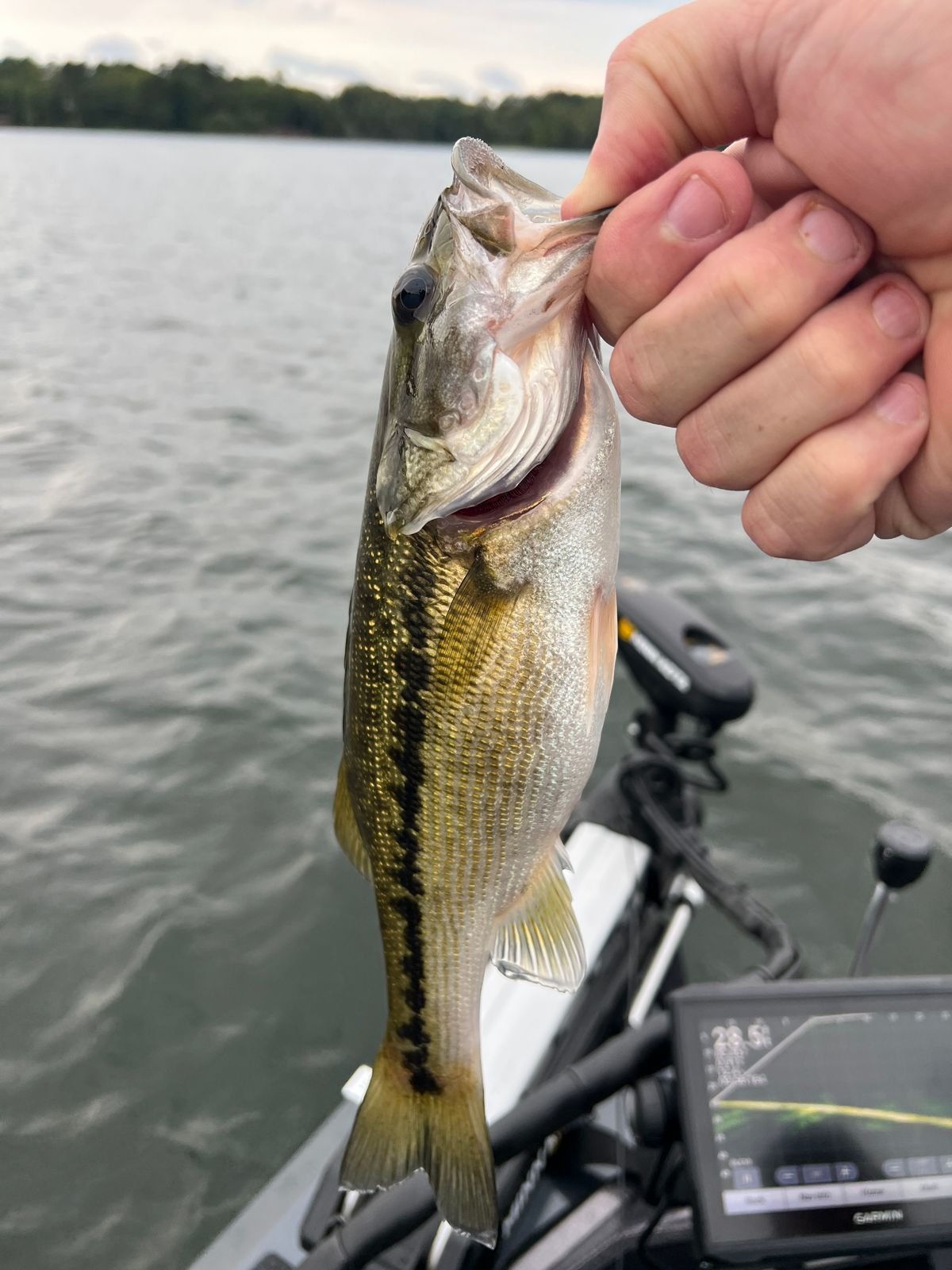
| Black bass (largemouth, smallmouth, spotted, Alabama, shoal and the redeye group) | 10 combined | No more than 5 may be smallmouth. No statewide minimum size; see lake exceptions. |
| Crappie | 30 | 9-inch minimum on public waters, including Aliceville and Pickwick. Exempt: lakes under 500 acres, Chattahoochee reciprocal waters, Big Bear Lake (Bear Creek Reservoir), Lake Jackson at Florala and Weiss. Weiss has a 10-inch minimum. |
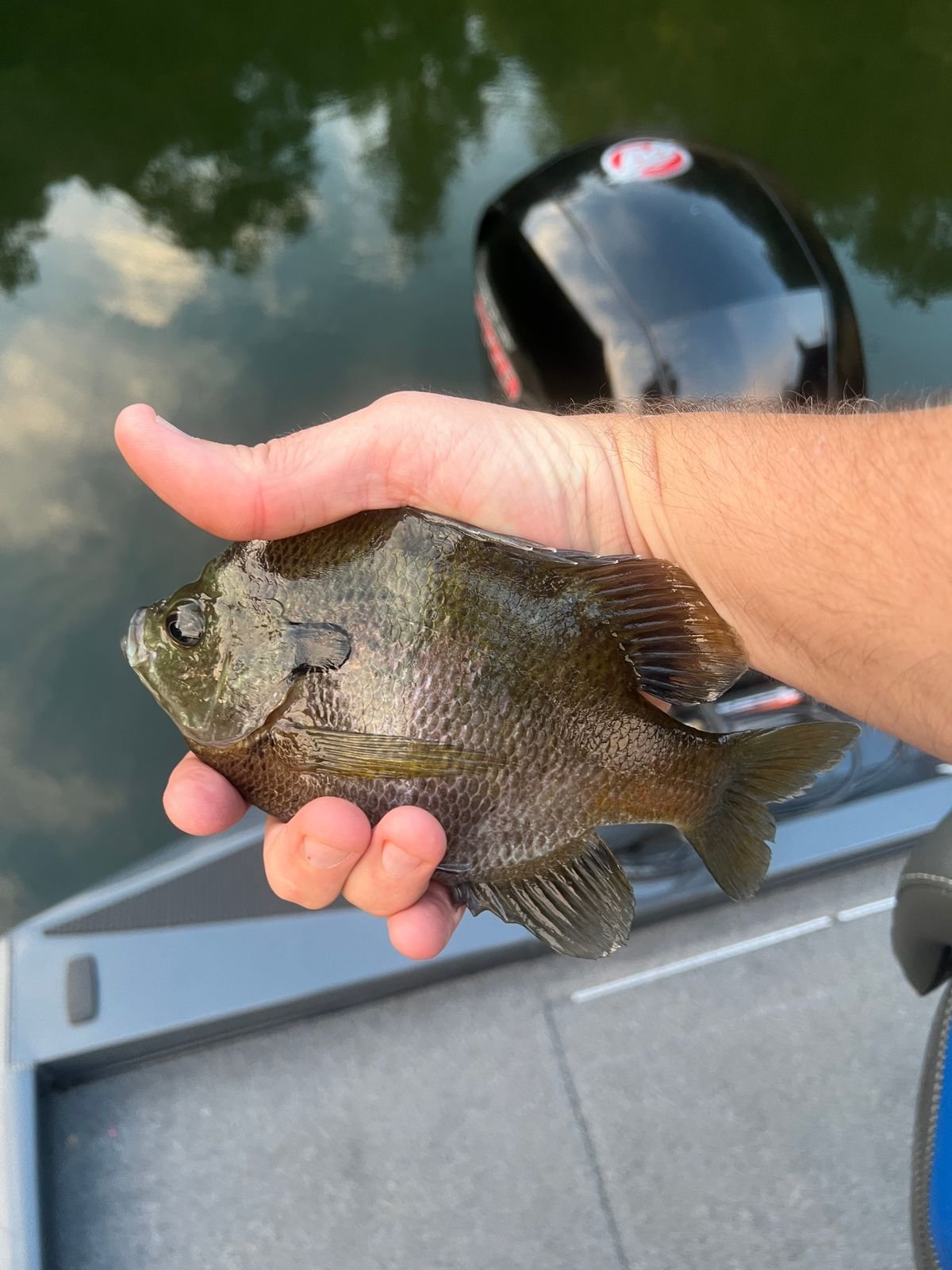
| Bream (bluegill, redear and other sunfish) | 50 | No size limit. |
| Catfish under 34 inches | No limit | |
| Catfish 34 inches and over | 1 | Doesn’t apply in the Perdido, Conecuh, Blackwater, Yellow, Choctawhatchee, Chipola and Chattahoochee river basins. It’s illegal to transport a live catfish 34 inches or longer out of Alabama. |
| Saltwater striped bass and hybrids (combined) | 15 | No more than 5 over 22 inches. Exceptions on the Chattahoochee, Smith, Martin, Yates, Thurlow and certain coastal rivers. |
| White bass | 15 | Chattahoochee exception below. |
| Yellow bass | 15 | |
| Walleye | 2 | Closed in several waters (see below). |
| Sauger | 5 | 15-inch minimum. |
| Rainbow trout | 5 | Sipsey Fork tailwater below Smith Dam: no more than two rods, and no culling. |
| Yellow perch | No limit | |
| Skipjack herring | 50 | New for 2026-27: Can’t be sold from any public water. |
| Alligator gar | 1 | If caught on commercial gear, release it immediately. |
| Sturgeon and paddlefish | Closed | Release immediately with as little harm as possible. |
Lake-by-lake exceptions
These special rules are listed in the 2026-27 regulations. They’re the ones most likely to get an angler a ticket, so check this list before you head to any of these lakes.
| Water | Special rule |
|---|---|
| Guntersville and its tributary, Town Creek | Largemouth and smallmouth bass: 15-inch minimum. |
| Pickwick | Largemouth and smallmouth bass: 15-inch minimum. Crappie: 9-inch minimum. |
| Wheeler | Smallmouth bass: 15-inch minimum. |
| Wilson, plus Big Nance and Town creeks | Smallmouth bass: 15-inch minimum. |
| Weiss | Crappie: 10-inch minimum. |
| Lewis Smith | No largemouth, Alabama or spotted bass from 13 to 15 inches (a protected slot). No more than 2 striped bass over 22 inches. No culling striped bass June 15 to October 15. |
| Lake Martin | No more than 2 striped bass over 22 inches. No culling striped bass June 15 to October 15. |
| Yates and Thurlow | No more than 2 striped bass over 22 inches, and only 1 of those over 30 inches. |
| Harris | No largemouth bass from 13 to 16 inches (protected slot). |
| Walter F. George (Lake Eufaula) and tributaries | Largemouth bass: 14-inch minimum. Georgia reciprocal rules also apply. |
| West Point and tributaries | Largemouth bass: 14-inch minimum. |
| Chattahoochee River, its lakes and tributaries | White bass, striped bass and hybrids: 15 combined, only 2 over 22 inches. Shoal bass can’t be kept in Little Uchee, Uchee, Osanippa, Halawakee and Wacoochee creeks. |
| Duck River Reservoir (new for 2026-27) | No black bass from 14 to 22 inches. Only 1 of the 10-fish limit can be over 22 inches. |
| Lake Jackson at Florala | Black bass: 5 fish over 12 inches, only 1 over 22 inches. |
| Dog, East Fowl, Fish, Fowl, Perdido and West Fowl rivers and tributaries (Mobile and Baldwin counties, new for 2026-27) | Saltwater striped bass: 16-inch minimum and 2 per day. |
Waters closed to walleye
You can’t take walleye by any method from Sweetwater Lake (Talladega National Forest), White Plains Lake (Whitesides Mill Lake) and Shoal Creek above it, Lake Mitchell and its tributaries Walnut, Hatchet and Weogufka creeks, or the Mulberry Fork and Sipsey Fork and their tributaries in Blount, Cullman, Lawrence, Walker and Winston counties. Release any walleye caught there right away.
Where different rules apply
State park lakes
State park lakes, like Lake Lurleen near Tuscaloosa, use creel limits posted at each lake. Fishing is by rod and reel or pole and line only. Trotlines, set hooks, gigs, nets, seines, spear guns and bows aren’t allowed (Ala. Admin. Code 220-5-.02). Our Lake Lurleen State Park fishing guide covers one example.
State public fishing lakes
The state’s county public fishing lakes (Bibb, Fayette, Lamar, Walker, Madison and others) post their own creel, possession and size limits. Where a species isn’t posted, statewide limits apply. Anyone 12 or older needs a lake fishing permit in addition to a license, and boat launches need a launch permit. Fishing is daylight-only unless the lake says otherwise, and only hook and line is allowed (Outdoor Alabama, public fishing lakes rules).
Border lakes
On Eufaula and the other Chattahoochee lakes, and on Pickwick and other Tennessee River waters near the state line, reciprocal agreements decide which license works where and can affect limits. See our Lake Eufaula guide and our Pickwick Lake guide for how those agreements work.
Saltwater
Saltwater species have their own size and bag limits set by the Marine Resources Division. They’re not covered in this cheat sheet. For winter sheepshead and pompano on the coast, see our Gulf Shores and Orange Beach winter fishing guide.
Other rules worth knowing
- Tournaments: The creel limits don’t apply to fish held alive for release by a legitimate tournament, as long as they’re released unharmed into the same water as soon as reasonably possible on the same day.
- Trotlines, snag lines and snare lines must carry a plastic or metal tag with the owner’s name and either an address, fishing license number or phone number. Non-commercial anglers can’t fish more than 100 hooks total across all of their lines.
- Culling: On Smith and Martin, culling striped bass is illegal from June 15 to October 15. On the Sipsey Fork tailwater, culling trout is always illegal. Culling means releasing a fish you’ve already put in the livewell, stringer or cooler, even if you don’t replace it with another one.
- Fish consumption advisories: The Alabama Department of Public Health publishes them for specific waters. Call (800) 201-8208 or visit alabamapublichealth.gov.
- License: Most anglers need one. See our Alabama fishing license guide for who needs one, the prices and the exemptions.
How to use this sheet
- Start with the statewide table for your species.
- Check the lake-by-lake table for the lake you’re fishing. Lake rules override statewide rules.
- If you’re at a state park lake, a public fishing lake or a federal lake, read the posted signs. They apply there.
- When in doubt, release the fish, or call the Wildlife and Freshwater Fisheries district office for that area.
A quick note on accuracy: When we checked on November 1, 2026, Outdoor Alabama’s creel-limits web page still showed the 2025-26 versions of three rules. It had no Duck River slot and no coastal-river striped bass rule, and it limited the skipjack sale ban to the Tennessee River. The 2026-27 regulations digest, updated August 28, 2026, lists all three as changes for this season, so we’ve used the 2026-27 versions. All other limits matched between the two sources. If you’re unsure, go with the current official regulation book or ask the Department of Conservation and Natural Resources. We’ll update this page when the rules change. If you spot something out of date, let us know.
Pingback: Crappie Jigs for Alabama Lakes: How to Pick Weight, Size and Color – Dixie Fishing