Weiss Lake has called itself the “Crappie Capital of the World” for a long time, and Outdoor Alabama uses the nickname too. Fall is a good time to see why. The heat has broken, the pleasure boats have mostly gone home and the crappie are on the move. But November on Weiss has one complication many visitors overlook: the lake is being drawn down. This guide covers where crappie tend to go in late fall, how the drawdown changes things and the rules you need to know before you keep any fish.
Quick facts
- Size and owner: 30,200-acre Alabama Power hydroelectric lake on the Coosa River in northeast Alabama, on the Georgia line (Outdoor Alabama).
- Pronunciation: “Wice,” per Outdoor Alabama.
- Access: The state lists four free public access areas and 37 privately run marinas.
- Crappie size limit: 10-inch minimum on Weiss. This is stricter than the 9-inch rule on most Alabama public waters (creel and size limits).
- Crappie creel limit: 30 per day under statewide rules.
- Fall drawdown: Alabama Power starts lowering Weiss on October 1 and finishes by November 30 to make room for winter and spring flood water (Alabama Power).
- Species: Black crappie, white crappie and naturally occurring hybrids of the two (Outdoor Alabama).
Why November is different on Weiss
On many lakes, fall crappie fishing is mostly about water temperature. On Weiss, falling water matters just as much. Weiss is one of Alabama Power’s storage reservoirs, so its level is lowered each fall. According to Alabama Power, that drawdown begins October 1 and ends by November 30. The utility refills the lake in spring so it reaches summer levels by May.
That has a few practical effects for crappie anglers:
- Shallow cover dries up or gets too thin. Brush, stumps and dock posts that held fish in early fall may sit in just a foot or two of water by late November, or in none at all.
- Fish slide toward channels and ledges. As the water drops and cools, crappie move toward deeper creek channels and river ledges. That is where the next structure is.
- Ramps and running lanes change. Shallow ramps and flats that were easy in summer can be tricky at winter pool. Check the current lake level before you launch.
Alabama Power posts real-time levels and generation information for Weiss at apcshorelines.com and through its Shorelines app. We check it before every trip to a Coosa lake in the fall. For a primer on the numbers, see our guide to how to read lake level and dam generation schedules.
Where the crappie go
The best first-hand description we have found comes from Outdoor Alabama’s interview with Capt. Lee Pitts, a crappie guide on Weiss and Neely Henry. You can read the full article. Here is the pattern he describes for the colder months.
Ledges and creek channels
Pitts says that in winter, crappie move onto the ledges and creek channels in deeper water. That is the general direction fish travel through late fall as well. Start where a creek channel swings close to a flat or a point, or where a river ledge drops off.
Brush on the breaks
Structure is the key, Pitts says. Guides and serious anglers on Weiss and Neely Henry put out their own brush and cane beds weighted with concrete blocks. They work with Alabama Power on this habitat. He describes placing cane beds off the edges of the breaks in 10 to 12 feet of water, and some as deep as 18 to 20 feet. That gives anglers options whether the fish are shallow or still deep. A good sonar unit makes this much easier, because you can see brush and fish before you ever drop a bait.
Toward the bays as winter sets in
Pitts says that by December he starts trolling, because baitfish begin moving toward the bays and the crappie follow. Some fish stay on the ledges. The point for November anglers is to watch the bait. When shad start showing up on your electronics in the mouths of bays, the crappie are rarely far behind.
Presentations that fit cold water
Vertical jigging over brush
For fish holding tight to brush on a ledge, a vertical presentation is hard to beat. Pitts uses a drop-shot rig with the bait about 6 inches above the weight, along with a variety of small crappie jigs. He says cold-water fish don’t need much movement. A slight quiver of the rod tip keeps the bait in the strike zone. On tough days, he switches to live minnows.
Slow trolling for suspended fish
When fish suspend over open water, Pitts watches his electronics closely to find their depth. He says crappie may hold 10 to 12 feet down over 20 to 30 feet of water. He prefers light jig heads in the 1/24 to 1/16 ounce range for better action at slow speeds. When he needs more depth, he adds a split shot instead of a heavier head.
Weather
Pitts likes some sunshine and a light ripple. Heavy wind makes it hard to keep a vertical presentation steady, while a little chop pushes fish onto cover. On the most open stretches of Weiss, a stiff north wind can make the big bays rough. Pitts notes that Neely Henry, just downstream on the Coosa, is more of a river system and can offer shelter on windy days. For help choosing jig weights, sizes and colors, see our guide to crappie jigs for Alabama lakes.
A simple November game plan
- Check the lake level on Alabama Power’s Shorelines site and pick a ramp that works at the current level.
- Start on creek channel ledges in the 10 to 20 foot range. Idle along with your sonar and look for brush with fish on it.
- Fish vertically with a small jig or a minnow rig and keep the bait still.
- If the brush is empty, look for bait in the bay mouths and slow-troll light jigs at the depth where the fish are suspended.
- Measure every fish. The 10-inch minimum is the rule on Weiss.
Know the rules before you fill the cooler
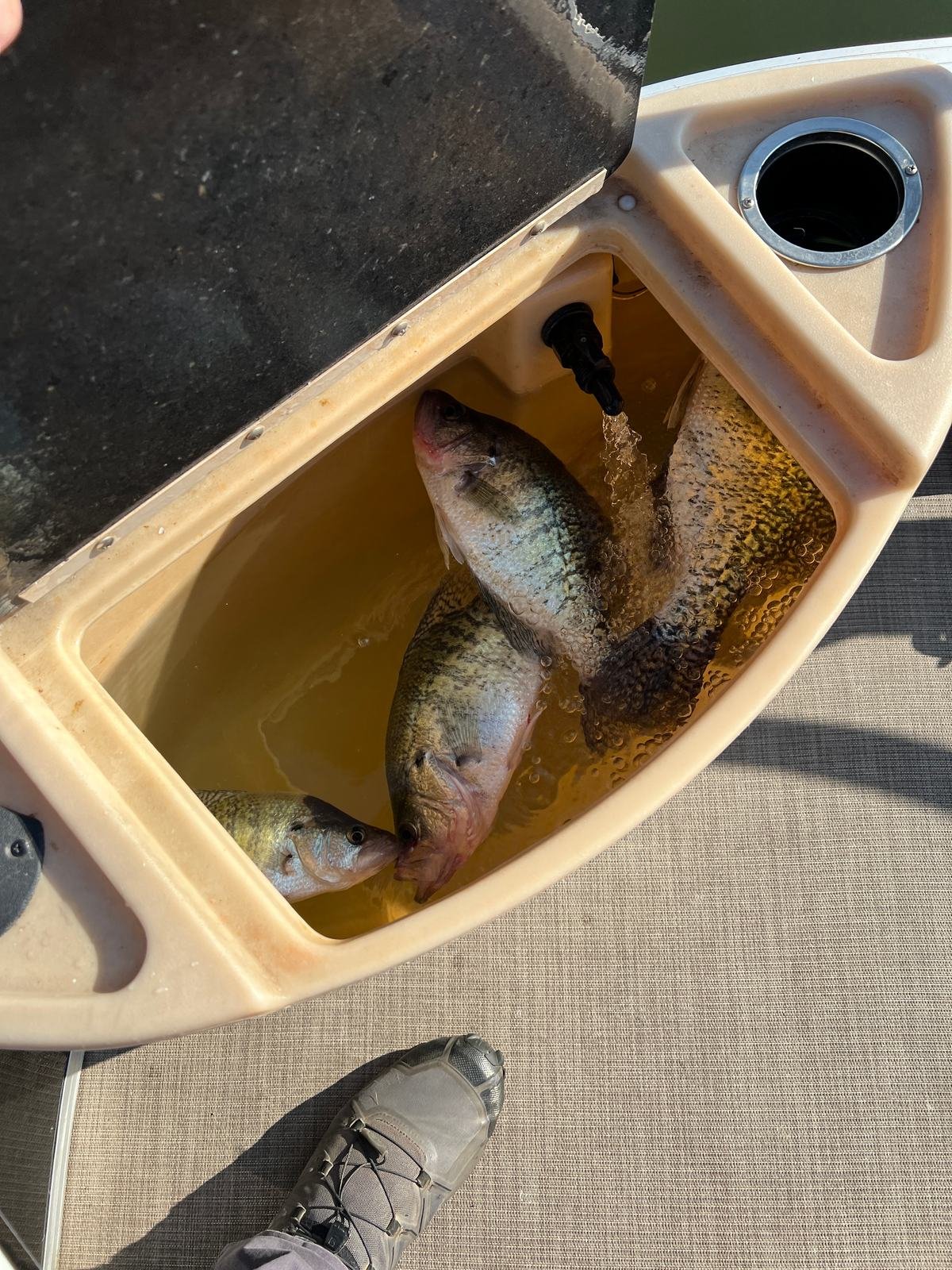
Weiss is a special case under Alabama’s crappie rules. Most public waters have a 9-inch minimum. Weiss is exempt from that rule but has its own 10-inch minimum. The statewide daily creel limit of 30 crappie applies. Measure total length from the front of the closed mouth to the tip of the pinched tail. That is how the state defines it. Weiss also borders Georgia, so if your fishing crosses the state line, check Georgia’s rules as well. Alabama residents 16 to 64 and nonresidents 16 and older need an Alabama fishing license. See our license guide for details.
Beyond crappie
Outdoor Alabama says Weiss has more to offer than crappie. Its largemouth bass fishery is described as one of the better ones in the state, with a population made up mostly of 15- to 18-inch fish. The striped bass population is dominated by 3- to 7-pound fish, and the state says stripers over 25 pounds have been caught. If the crappie are stubborn, you have options.
From Tuscaloosa, Weiss is a long day trip, or better yet a weekend. The Cherokee County area has campgrounds, motels and rental cabins along the shoreline, and the state notes the local economy depends on anglers. We’ll add Weiss to our weekly Dixie Fishing Report as we get fresh information.