
This is the first Dixie Fishing Report, a weekly look at conditions for anglers in West and Central Alabama. To be clear up front, this isn’t a list of who caught what. We don’t have first-hand reports to share this week, and we won’t make them up. Instead, this report pulls together the things that actually drive the bite: weather, lake levels, river flows, water temperature and the calendar. Then it gives you a reasonable game plan based on those conditions.
Last checked: November 2, 2026. We first put this report together from conditions checked October 31, then refreshed it with Monday morning’s numbers. Forecasts, generation schedules and lake levels change daily, so check the linked sources before you go.
The big picture this week
- Clocks fell back. Daylight saving time ended at 2 a.m. Sunday, November 1. Evening trips are now about an hour shorter, and morning light comes earlier.
- Warm and breezy, then a soaking front. The National Weather Service’s Tuscaloosa forecast (updated early Monday, November 2) calls for mostly cloudy skies and highs near 79 to 80 Monday and Tuesday, with a southeast wind of 10 to 15 mph. Showers and thunderstorms are likely Tuesday night (70 percent) and expected Wednesday (100 percent). The NWS forecast grid shows about an inch of rain for Tuscaloosa and a little under an inch for Birmingham, mostly from late Tuesday night through Wednesday afternoon.
- Cooler and calm behind it. After the front, the forecast turns mostly sunny from Thursday through Sunday. Winds will be light and shift to the northwest and then the north. Highs fall from the mid 70s Thursday to near 70 by the weekend, and lows drop from the low 50s to the low 40s by Sunday night. Birmingham runs a degree or two cooler.
- Still dry overall. The latest U.S. Drought Monitor map is still the one released October 29 (data valid October 27). The next one comes out Thursday, November 5. It showed about 71 percent of Alabama abnormally dry or worse, about 34 percent in moderate drought or worse and about 15 percent in severe drought or worse. Tuscaloosa County was 100 percent abnormally dry, with about 65 percent in moderate drought or worse and about 34 percent in severe drought or worse. An inch of rain Wednesday will help, but it won’t erase that.
- Fall drawdowns are underway. Alabama Power’s storage lakes, including Smith, Martin, Logan Martin and Weiss, are moving toward winter pool. That process wraps up around the end of November.
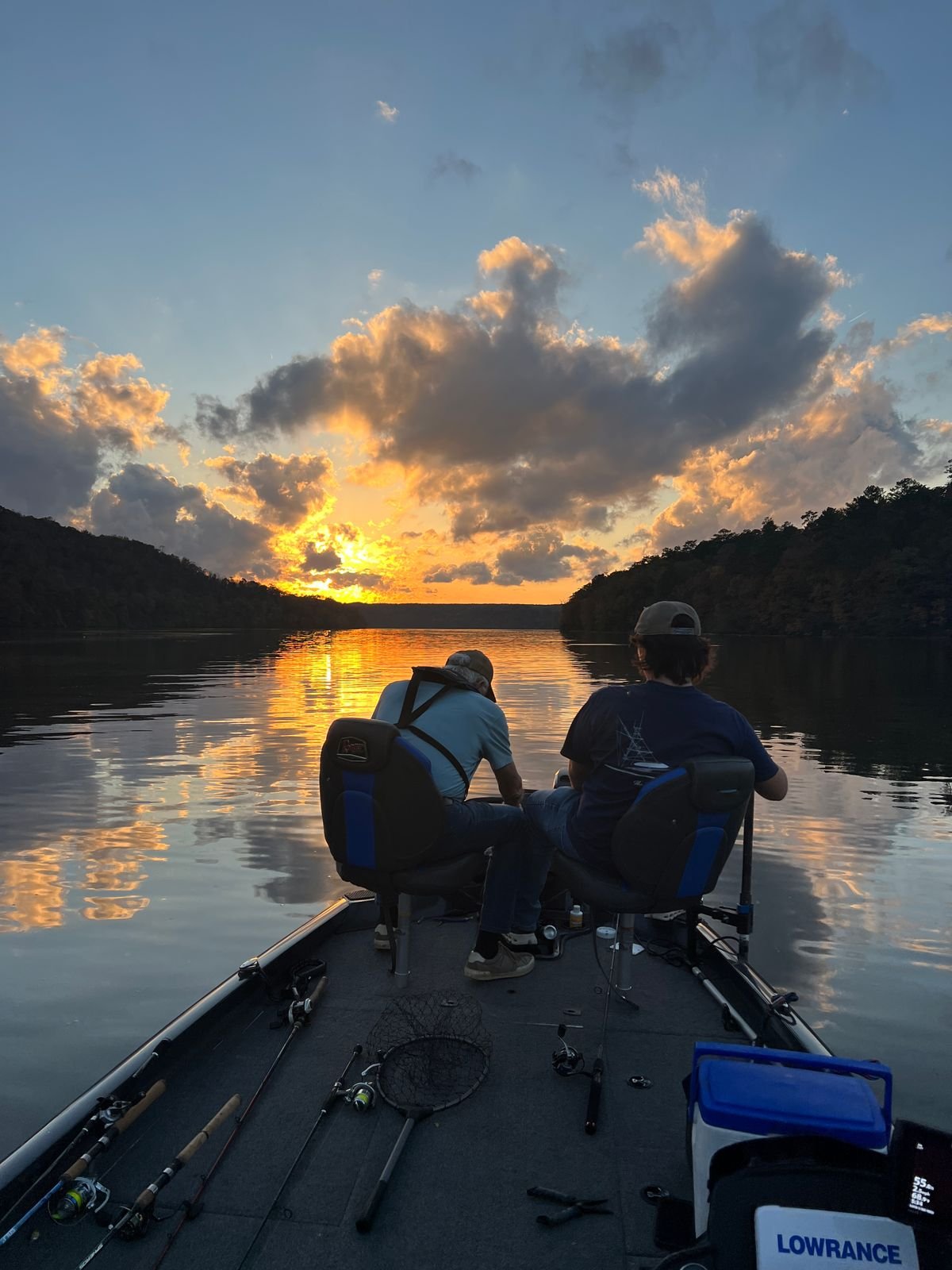
Lake levels
These readings come from Alabama Power Shorelines on the morning of November 2, 2026. Generation schedules are tentative and can change.
- Smith Lake: 498.48 feet (summer full pool is 510), essentially unchanged since October 31. One unit is scheduled from 6 to 9 p.m. Monday through Wednesday, November 2 to 4. In past years, Alabama Power has described Smith’s winter pool as near 496 feet (Alabama Power, 2021), so Smith has only a little farther to fall.
- Bankhead: 254.15 feet (normal is about 255). No generation is scheduled through Wednesday, November 4.
- Holt: 186.34 feet (normal is about 187). One unit is scheduled from 6 to 7 p.m. Monday, then from 8 to 9 p.m. Tuesday and Wednesday.
- Lake Martin: 486.36 feet (summer full pool is 491), down about a tenth of a foot since October 31. Generation is scheduled from 11 a.m. to 9 p.m. Monday through Wednesday, with two units running from noon to 8 p.m.
- Logan Martin: 463.33 feet (summer full pool is 465). One unit is scheduled each afternoon and evening: 3 to 8 p.m. Monday, 4 to 9 p.m. Tuesday and 3 to 8 p.m. Wednesday.
- Weiss: 562.31 feet (summer full pool is 564). One unit is scheduled from 3 to 9 p.m. Monday and Tuesday, then from 1 to 9 p.m. Wednesday.
Bankhead and Holt are run-of-river lakes, so their levels stay fairly steady all year. On the storage lakes, a falling lake pulls fish off the shallowest cover. Docks and brush that held fish in early October may be high and dry, or nearly so. New to reading these numbers? See our guide to how to read lake level and dam generation schedules.
River flows and water temperatures
USGS gauges give a useful reality check. Keep in mind that the temperatures below are river gauge temperatures, not lake surface temperatures. Lakes will run a bit different, especially in the backs of creeks after a sunny afternoon. Temperatures are from about 6 a.m. Central on November 2. Flows are provisional USGS daily averages for November 1, compared with USGS records for that date.
- Black Warrior River at Northport: averaged about 924 cfs on November 1, a little under the median (about 1,000 cfs). Below Holt, the flow swings hard with generation. It ranged from near zero to more than 7,800 cfs over the past two days and read about 399 cfs early Monday.
- Tombigbee River at Demopolis Lock and Dam: about 1,100 cfs, well below the 25th percentile (about 1,960 cfs).
- Mulberry Fork at Cordova: about 128 cfs, below the 25th percentile (about 175 cfs). River gauge temperature 61.5°F, down from 63.7°F on October 31.
- Sipsey Fork near Grayson: river gauge temperature 58.8°F. This gauge sits above Smith Lake.
- Cahaba River at Centreville: about 174 cfs, below the 25th percentile (about 208 cfs). Upstream, the Cahaba River near Hoover gauge read a river gauge temperature of 63.5°F.
- Coosa River at the Alabama-Georgia state line: about 2,050 cfs, right around the 25th percentile (about 2,100 cfs). River gauge temperature 63.5°F.
- Tallapoosa River at Wadley, above Lake Martin: about 741 cfs, below the median (about 1,100 cfs) but above the 25th percentile. This gauge isn’t reporting a current water temperature.
Low 60s is classic fall transition water, and the gauges have slipped about a degree since Saturday. Shad are moving into creeks, and bass, crappie and stripers tend to follow them. Expect Wednesday’s rain and the cooler nights that follow, with lows in the 40s by the weekend, to drop shallow water temperatures a few more degrees. The rain may also put a little stain and current into creeks and the upper ends of the lakes for a few days.
What to try, water by water
These are suggestions based on the conditions above and on typical early-November patterns. They aren’t guarantees.
Black Warrior River (Bankhead, Holt, Oliver)
Between generation windows, the river is low and current is scarce. The short evening runs at Holt (6 p.m. Monday, then 8 p.m. Tuesday and Wednesday) may be the best chance for moving water below the dam. Arrive early, stay well outside the restricted area and be ready when the units start. Wednesday’s rain could add some natural flow later in the week. Our guide to Black Warrior River bass below the locks and dams explains how to read the schedule and where bass set up in current.
Lake Tuscaloosa
Clear water and shad moving into creeks make Monday and Tuesday a good time to cover water. The southeast breeze should help. Try moving baits on secondary points and the first half of creeks, then slow down with a shaky head on rock and docks if the wind dies. After the rain, check whether the creek arms pick up any stain. See our Lake Tuscaloosa fishing guide for ramps and seasonal patterns.
Smith Lake
Smith is sitting near 498.5 feet, close to winter pool, and the water is very clear. Early November is when spotted bass often start moving onto points, bars and humps. Follow the bait with your electronics, and remember the 13- to 15-inch protected slot for largemouth, Alabama and spotted bass on Smith. Our Smith Lake winter spotted bass guide covers the details.
Lake Martin and Logan Martin
Both lakes are still dropping slowly, and both have daily generation scheduled. Fish the next depth break out from where they were holding last month, and target docks and brush that still have water around them. Current from the afternoon generation windows can position fish on points near the main channel.
Crappie anywhere
Brush piles and bridge pilings near creek channels are a reliable fall starting point. The post-frontal cooldown from Thursday on could tighten fish to cover, so slow your presentation down by the weekend. If you’re willing to drive north, Weiss is about 1.7 feet below summer pool. Our fall crappie on Weiss Lake guide explains how the drawdown moves fish there.
Best windows this week
- Monday and Tuesday: Warm (near 80), mostly cloudy and stable ahead of the front, with a steady southeast breeze. Cloud cover could stretch a shallow bite into the day. Tuesday afternoon brings only a slight chance of a shower.
- Tuesday night and Wednesday: Showers and thunderstorms, with about an inch of rain. Stay off the water when there’s lightning. A falling barometer ahead of a front can trigger feeding, but it’s never worth the risk.
- Thursday through Sunday: Post-frontal, with light northwest to north wind, bright sun and cooler nights. Expect a tougher bite early, then slow down and fish tighter to cover. The afternoons should be better as the water warms.
Rules reminders
- Know the lake-specific limits. Smith has its 13- to 15-inch bass slot. Weiss has a 10-inch crappie minimum. Pickwick and Guntersville have 15-inch bass minimums. The full list is on the state’s creel and size limits page.
- Check your license. Our Alabama fishing license guide covers who needs one and what it costs.
- Be visible. Now that the clocks have fallen back, more anglers will be coming in after dark. Check your navigation lights before you launch.
- The full list of statewide limits and lake exceptions is on our Alabama freshwater creel and size limits cheat sheet.
Help us build this report
This report will run every week. It will get better as we add real reports from the water, both ours and those from readers who are willing to share. If you fish West or Central Alabama and want to tell us what’s working, use our contact page. We’ll only publish catch details we can attribute and that you’re comfortable sharing, and we’ll never name your spot without permission.