Lake Tuscaloosa sits just north of town, and for a lot of us in West Alabama it is the closest big water we have. It is also a lake that confuses visitors. The water is clear, the banks are lined with docks and pines, and the fish can be stubborn. This guide covers what the state’s own biologists say about the lake, where the public ramps are, and how we think about fishing it through the year.
Quick facts
- Size: 5,885 acres with 177 miles of shoreline (Outdoor Alabama).
- Location: About five miles north of Tuscaloosa and Northport, formed by damming the North River.
- Owner and purpose: City of Tuscaloosa; it is the city’s main drinking water supply (City of Tuscaloosa Lakes Division).
- Public launches: Binion Creek (state), Rock Quarry and Sharps Landing (municipal).
- Common sport fish: Alabama spotted bass, largemouth bass, bluegill, redear sunfish and white crappie, plus blue and channel catfish.
- Regulations: Statewide limits apply. Crappie under 9 inches may not be kept from Alabama public waters, and this lake is far larger than the 500-acre cutoff for that rule. Check the current creel and size limits before you keep fish.
What kind of lake this is
The most useful thing to understand about Lake Tuscaloosa is that it was built for drinking water, not for fish. According to the Alabama Division of Wildlife and Freshwater Fisheries, very little cover was left behind when the North River was impounded, and biologists expected the lake to be clear and infertile. That is how it turned out. Near the dam, the state reports water visibility that often runs past 20 feet.
Clear, infertile water means less food at the bottom of the food chain. The state describes the fishery as “forage limited,” with bass and crappie growth that runs from below average to average. The harvestable bass population mostly consists of fish 10 to 15 inches long. In plain terms, this is not a lake where we expect to fill a cooler with slabs or catch a parade of five-pounders. It is a lake where good anglers catch fish by adjusting to the clear water.
The good news is that the lake is not the same from end to end. The state notes that the upper reaches, near Binion Creek and Turkey Creek, are more fertile and less clear, and that they are generally the better areas to fish. If you only have a morning, that is where we would start.
Boat ramps and access
Outdoor Alabama lists three public launches:
- Binion Creek Access Area (state-operated), off U.S. 43 North. It puts you close to the more fertile upper lake.
- Rock Quarry Landing (municipal).
- Sharps Landing (municipal).
There are also private marinas and ramps around the lake. Outdoor Alabama says public bank access is available at many points around the lake, and detailed lake maps are sold at local marinas and sporting goods stores. A paper map or a mapping app on your phone is worth having here. The lake has a lot of creek arms, and they start to look the same.
Your boat has to be registered in Alabama like it would be on any other public water. The Tuscaloosa County License Commission handles registrations and renewals. The City of Tuscaloosa’s Lakes Division issues permits for docks, piers, dredging and other work along the shoreline. Those are property-owner permits, not something a visiting angler needs. If you have questions about lake rules, contact the Lakes Division directly.
The fish you are likely to catch
Spotted bass and largemouth
Alabama spotted bass, which the state now calls Alabama bass, suit this lake well. They like clear water, rock and deeper structure. The state notes that many local anglers work plastic worms or lizards along the rocky walls and ledges found throughout the lake. Largemouth are also present and tend to relate more to the shallow cover in the creeks and coves.
Crappie
White crappie are among the most common sport fish. The state’s sampling has shown crappie numbers on the low side, though, so we would treat crappie here as a bonus and not the main target. Remember the statewide 9-inch minimum if you plan to keep any.
Bream
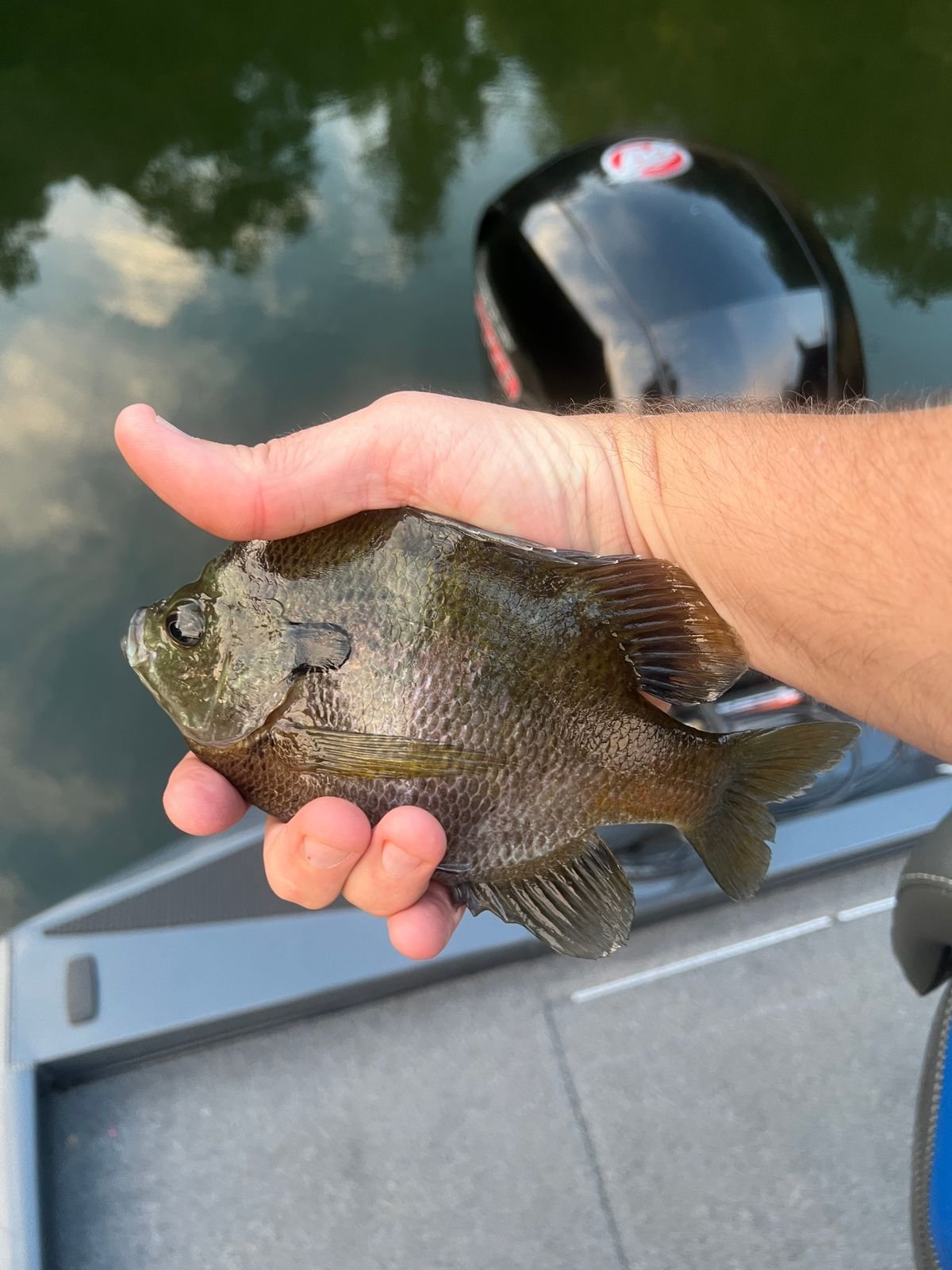
Bluegill and redear sunfish (shellcracker) are abundant. The state says they are often found along weed beds, backwater sloughs and coves. For families and kids, bream are often the most reliable action on the lake.
Catfish and others
Blue and channel catfish, freshwater drum, buffalo and carp round out the list. The tailwater below the dam on the North River is popular with local anglers. Before you keep anything, check our Alabama freshwater creel and size limits cheat sheet.
Seasonal patterns
These are general patterns for a clear Southern highland-style reservoir. They are not lake-specific survey data. Water temperature and weather matter more than the calendar, so use these as a starting point.
Winter (December to February)
Bass tend to slide toward deeper, steeper banks and channel edges in cold water. In a clear lake, that can mean quite deep. Slow presentations work best, like a jig, a shaky-head worm or a drop-shot fished on light line along rocky drops. Fish the sunny side of the lake on the afternoons after a few warm days.
Spring (March to May)
As the water warms, bass and crappie move toward the backs of creeks and pockets to feed and spawn. The upper lake around Binion and Turkey Creeks warms and colors up first, so it is a logical place to start. Soft plastics, small swimbaits and spinnerbaits all have their place. Bream spawning beds show up later in spring in protected shallow areas.
Summer (June to August)
Heat and boat traffic push fish deeper during the day. Early morning and late evening are the windows. The state lists topwater baits, including the Jitterbug style and willow-leaf spinners, as popular here. Night fishing is an option for those who know the lake. Bream fishing around weed beds and shady cover can be very good.
Fall (September to November)
Baitfish move into the creek arms as the water cools, and bass follow them. Fall is a good time to cover water with moving baits in the creeks and to watch for fish chasing shad on the surface.
Practical tips for a clear-water lake
- Go lighter on line. In water this clear, lighter fluorocarbon or a long fluorocarbon leader usually draws more bites than heavy line.
- Use natural colors. Green pumpkin, watermelon and shad patterns match the clear water and the forage.
- Keep your distance. Make long casts. Fish can see a boat coming in clear water.
- Fish the dirtier end. If the main lake is gin-clear and slow, run up toward the creeks where the state says fertility is higher.
- Respect the water supply. This is the city’s drinking water. Pack out every scrap of trash and line.
Before you go
Alabama residents ages 16 to 64 need a freshwater fishing license to fish from a boat, or from the bank outside their home county. Nonresidents 16 and older need one everywhere. Our Alabama fishing license guide explains the rules, or you can go straight to Outdoor Alabama’s license page. Check the current limits too, and contact the Alabama Wildlife and Freshwater Fisheries District III office or the City Lakes Division with any lake-specific questions.
Lake Tuscaloosa rewards patience more than luck. Fish the upper lake, go a little lighter and slower than you would on stained water, and keep an eye on the seasons. You will understand it a lot better after a few trips. When we have fresh reports from the lake, we will post them in our weekly Dixie Fishing Report. For other options close to town, see our list of the best fishing lakes near Tuscaloosa.
Keep a log of your Lake Tuscaloosa trips. Our free Fishing Tracker is a private fishing log where you can record the access point, conditions and each catch’s species, weight, length and bait.
Pingback: Dixie Fishing Report: Week of Nov 2 (West & Central Alabama) – Dixie Fishing
Pingback: Alabama Fishing License 2026-27: Cost, Exemptions, Where to Buy – Dixie Fishing